
Treatment Overview & Clinical Details
With advances in minimally invasive surgery, medical imaging, computer technology, and surgical instrumentation, Robotic-Assisted Surgery (RAS) has become an important component of modern surgical care.
Robotic-assisted surgical systems allow surgeons to control highly specialized instruments through a computer-assisted platform, enabling complex procedures to be performed through small incisions in selected patients.
In cancer care, robotic-assisted surgery may be used for certain tumors involving the prostate, kidney, bladder, gastrointestinal tract, lung, chest, and female reproductive system, among others.
It is important to understand that robotic-assisted surgery is not a separate type of cancer treatment and the robot does not perform the operation independently. The surgical procedure is planned and performed by a qualified surgeon, while the robotic system provides enhanced visualization, instrument control, and surgical dexterity.
Whether robotic-assisted surgery is appropriate depends on the type and stage of cancer, tumor location, the patient’s overall health, and the experience of the surgical team.
What Is Robotic-Assisted Surgery?
Robotic-assisted surgery is a form of minimally invasive surgery in which a surgeon uses a specialized robotic surgical system to control surgical instruments.
Unlike conventional open surgery, which generally requires a larger incision, minimally invasive procedures are performed through small incisions using a camera and specialized instruments.
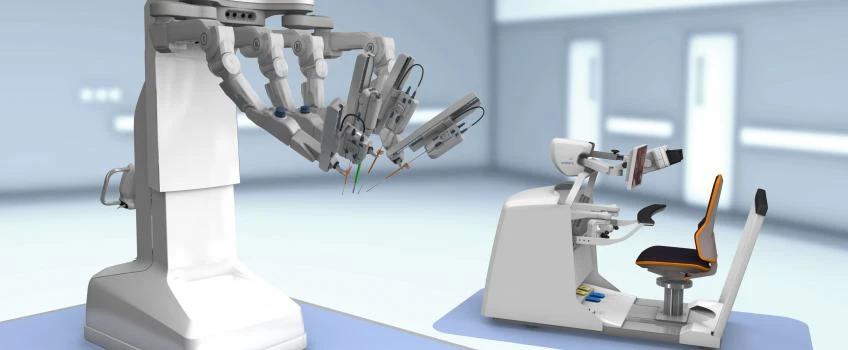
A robotic surgical system typically consists of several components:
Surgeon Console
The surgeon sits at a console and controls the surgical instruments while viewing the operative field through a high-definition imaging system.
Robotic Arms
The robotic arms hold the camera and specialized surgical instruments. The surgeon controls their movements throughout the procedure.
High-Definition 3D Visualization
Many robotic surgical systems provide magnified, high-definition visualization of the surgical field. Some systems provide three-dimensional imaging, allowing surgeons to better visualize anatomical structures.
Specialized Instruments
Robotic instruments can perform a variety of surgical tasks, including grasping, cutting, dissecting, suturing, and tissue manipulation.
The robotic system does not independently diagnose the tumor, make surgical decisions, or perform the operation on its own. The surgeon remains responsible for the surgical plan and all critical decisions.
How Does Robotic-Assisted Surgery Work?
The exact procedure varies depending on the type of surgery and the location of the tumor. In general, the process includes several stages.
Step 1: Preoperative Assessment
Before surgery, the medical team reviews the patient’s medical history, pathology results, imaging studies, cancer stage, and overall health.
The surgical team then determines whether surgery is appropriate and whether a robotic-assisted approach is suitable.
Step 2: Establishing Minimally Invasive Access
During surgery, several small incisions may be made to provide access for the camera and surgical instruments.
Step 3: Visualization of the Surgical Field
A camera provides a magnified view of the operative area, which is displayed at the surgeon’s console.
Step 4: Surgeon-Controlled Instrumentation
The surgeon controls the robotic instruments from the console. The system translates the surgeon’s hand movements into precise movements of the instruments inside the patient’s body.
Step 5: Tumor Removal or Other Surgical Treatment
For cancer surgery, the surgeon performs the procedure according to the patient’s individual anatomy and the characteristics of the tumor.
The objective may include complete removal of the tumor while preserving important surrounding structures whenever medically appropriate.
What Are the Potential Advantages?
Robotic-assisted surgery may provide several technical advantages in appropriately selected procedures.
Enhanced Visualization
High-definition and magnified visualization may allow surgeons to see anatomical structures in greater detail.
This can be particularly useful when operating around delicate structures, blood vessels, nerves, or other critical anatomy.
Greater Instrument Dexterity
Robotic instruments are designed to provide a range of motion that may be difficult to achieve with conventional laparoscopic instruments.
This can facilitate certain complex movements, particularly in confined anatomical spaces.
Precise Instrument Control
The surgeon controls the instruments directly from the console. Depending on the system, features such as motion scaling and tremor filtration may assist with delicate surgical movements.
Minimally Invasive Approach
Robotic-assisted surgery is generally performed through small incisions rather than the larger incision required for many open procedures.
For appropriately selected patients, minimally invasive surgery may be associated with benefits such as smaller incisions, less postoperative discomfort, and faster recovery compared with some open procedures.
However, outcomes vary according to the specific operation, the patient’s condition, and the experience of the surgical team.
Assistance With Complex Reconstruction
Some procedures require not only tumor removal but also detailed suturing or reconstruction.
The flexibility of robotic instruments may facilitate certain complex reconstructive procedures.
Which Cancers Can Be Treated With Robotic-Assisted Surgery?
Robotic-assisted surgery is primarily used in the surgical treatment of selected solid tumors.
Potential applications include:
Urological Cancers
Robotic-assisted procedures may be used for selected patients with:
- Prostate cancer
- Kidney tumors
- Bladder cancer
Robotic-assisted radical prostatectomy is one of the most established applications of robotic surgery.
Gastrointestinal Cancers
Depending on the tumor and individual circumstances, robotic-assisted surgery may be considered for selected cases of:
- Colorectal cancer
- Gastric cancer
- Esophageal cancer
- Certain pancreatic tumors
- Certain liver and biliary tumors
Gynecologic Cancers
Robotic-assisted surgery may be considered for selected gynecologic cancers, including certain cancers of the uterus and other reproductive organs.
Thoracic Cancers
Robotic-assisted thoracic surgery may be used in selected patients with:
- Lung cancer
- Mediastinal tumors
- Other conditions requiring thoracic surgery
The suitability of robotic surgery depends on the tumor’s size, location, stage, relationship to surrounding structures, and the patient’s overall condition.
Is Robotic-Assisted Surgery Better Than Traditional Surgery?
Not necessarily.
Robotic-assisted surgery is a surgical approach rather than a universally superior treatment.
For some complex procedures, robotic technology may provide technical advantages compared with conventional laparoscopy or open surgery. For other procedures, traditional laparoscopic or open surgery may be equally appropriate or preferable.
For cancer surgery, the most important considerations include:
Complete tumor removal, adequate surgical margins, appropriate lymph-node management when indicated, patient safety, preservation of important organ function when possible, and appropriate long-term cancer control.
The availability of a robotic surgical system alone should not determine whether a patient undergoes robotic surgery.
The decision should be based on the patient’s individual clinical situation and the evidence supporting the procedure.
Are There Risks Associated With Robotic-Assisted Surgery?
Yes.
Robotic-assisted surgery is still surgery and therefore carries risks.
Potential complications may include:
- Bleeding
- Infection
- Anesthesia-related complications
- Injury to surrounding organs or tissues
- Blood clots
- Postoperative pain
- Wound or incision-related complications
- Urinary, bowel, sexual, or other organ-specific complications, depending on the procedure
- Conversion to open surgery when necessary
There may also be risks related to surgical instruments or the robotic system itself.
Patients should discuss the potential benefits, risks, alternatives, and expected outcomes with their surgical team before making a treatment decision.
Does Robotic Surgery Reduce the Risk of Cancer Recurrence?
Robotic surgery should not be considered a treatment that inherently prevents cancer recurrence.
The risk of recurrence depends on many factors, including:
- Cancer type
- Tumor stage
- Tumor biology
- Lymph-node involvement
- Presence or absence of distant metastases
- Surgical margins
- Response to systemic treatment
- Need for postoperative therapy
For some cancers, minimally invasive surgical approaches, including robotic-assisted surgery, have become established treatment options.
However, the long-term oncological outcomes of different surgical approaches can vary depending on the cancer type and procedure.
Therefore, statements such as “robotic surgery eliminates the risk of recurrence” or “robotic surgery is always superior for cancer treatment” are not medically appropriate.
Who May Be a Candidate for Robotic-Assisted Surgery?
There is no single criterion that determines whether a patient is suitable for robotic surgery.
The medical team may consider:
- Cancer type
- Cancer stage
- Tumor size
- Tumor location
- Involvement of surrounding organs or structures
- Presence of metastases
- Previous abdominal or thoracic surgery
- Overall health and physical condition
- Cardiopulmonary function
- Ability to undergo general anesthesia
- Surgical complexity
- Experience of the surgical team
- Availability of appropriate postoperative care
For some patients with localized solid tumors, surgery may be an important part of potentially curative treatment.
For patients with advanced or metastatic disease, systemic treatments such as chemotherapy, targeted therapy, immunotherapy, or other treatments may play a more important role. Surgery may still have a role in selected situations, including local disease control or management of cancer-related complications.
Robotic-Assisted Surgery vs. Conventional Surgery
| Feature | Open Surgery | Laparoscopic / Thoracoscopic Surgery | Robotic-Assisted Surgery |
| Incision | Usually larger | Usually smaller | Usually smaller |
| Visualization | Direct visualization | Camera-based visualization | High-definition visualization; 3D available in many systems |
| Instrument mobility | Direct surgical instruments | More limited articulation | Enhanced instrument articulation |
| Surgeon control | Direct | Direct | Surgeon-controlled robotic instruments |
| Minimally invasive | Generally no | Yes | Yes |
| Complex procedures | Established option | Effective for many procedures | May offer technical advantages in selected procedures |
| Equipment requirements | Generally lower | Moderate | Generally higher |
| Training | Extensive surgical training | Additional minimally invasive training | Additional robotic-system training |
This table provides a general comparison only. The most appropriate approach depends on the specific cancer, procedure, patient, and surgical team.
The Surgeon and Surgical Team Remain the Most Important Factors
The term “robotic surgery” can sometimes create the impression that the technology itself is performing the operation.
In reality, the surgeon remains at the center of the procedure.
Robotic technology does not replace the surgeon’s clinical judgment regarding:
- Whether surgery is appropriate
- The optimal surgical approach
- The extent of tumor removal
- Preservation of critical structures
- Management of unexpected findings
- Whether conversion to open surgery is necessary
- Postoperative treatment planning
For this reason, patients considering robotic-assisted surgery should evaluate not only whether a hospital has a robotic surgical system, but also:
The surgeon’s experience with the specific procedure, the hospital’s overall cancer-treatment capabilities, the availability of multidisciplinary care, and the clinical evidence supporting the procedure.
Robotic Surgery as Part of Multidisciplinary Cancer Care
Cancer treatment is increasingly based on a multidisciplinary approach.
Depending on the patient’s condition, a multidisciplinary team may include:
- Surgical oncologists
- Medical oncologists
- Radiation oncologists
- Radiologists
- Pathologists
- Anesthesiologists
- Other relevant specialists
For selected patients, treatment may follow a sequence such as:
Neoadjuvant therapy → Robotic-assisted tumor resection → Pathological assessment → Adjuvant therapy → Follow-up
For other patients, treatment may involve:
Systemic therapy → Response assessment → Surgery or other local treatment
Therefore, robotic-assisted surgery should generally be viewed as one component of an overall cancer treatment strategy, rather than as a stand-alone cancer therapy.
Questions Patients Should Ask Before Robotic Surgery
Before deciding on robotic-assisted surgery, patients may wish to ask their medical team:
1. Is surgery appropriate for my cancer?
2. Why is robotic-assisted surgery being recommended in my case?
3. What are the potential advantages compared with open or conventional laparoscopic surgery?
4. What is the primary goal of the surgery?
5. Is complete tumor removal expected to be achievable?
6. Is there a possibility that open surgery may be required?
7. What are the major potential complications?
8. How experienced is the surgeon with this specific procedure?
9. Will I need chemotherapy, immunotherapy, targeted therapy, or radiation therapy before or after surgery?
10. What is the expected recovery process?
Having these questions answered can help patients make informed decisions together with their medical team.
Conclusion
Robotic-Assisted Surgery represents an important development in modern minimally invasive surgery.
By combining advanced visualization, computer-assisted control, and specialized surgical instruments, robotic systems can provide surgeons with additional technical capabilities during selected complex procedures.
In cancer care, robotic-assisted surgery may be an appropriate surgical option for carefully selected patients with certain solid tumors.
However, robotic surgery is not automatically the best option for every patient, nor does the presence of a robotic system itself determine the quality of cancer treatment.
The most appropriate treatment should be based on:
Accurate diagnosis → Comprehensive staging → Individualized treatment planning → Multidisciplinary evaluation → Appropriate surgical technique → Integrated postoperative care.
For patients considering robotic-assisted cancer surgery, a comprehensive review of pathology reports, imaging studies, previous treatments, overall health, and treatment goals is recommended before a final surgical decision is made.
The goal is not simply to use robotic technology, but to select the most appropriate treatment strategy for each individual patient.