
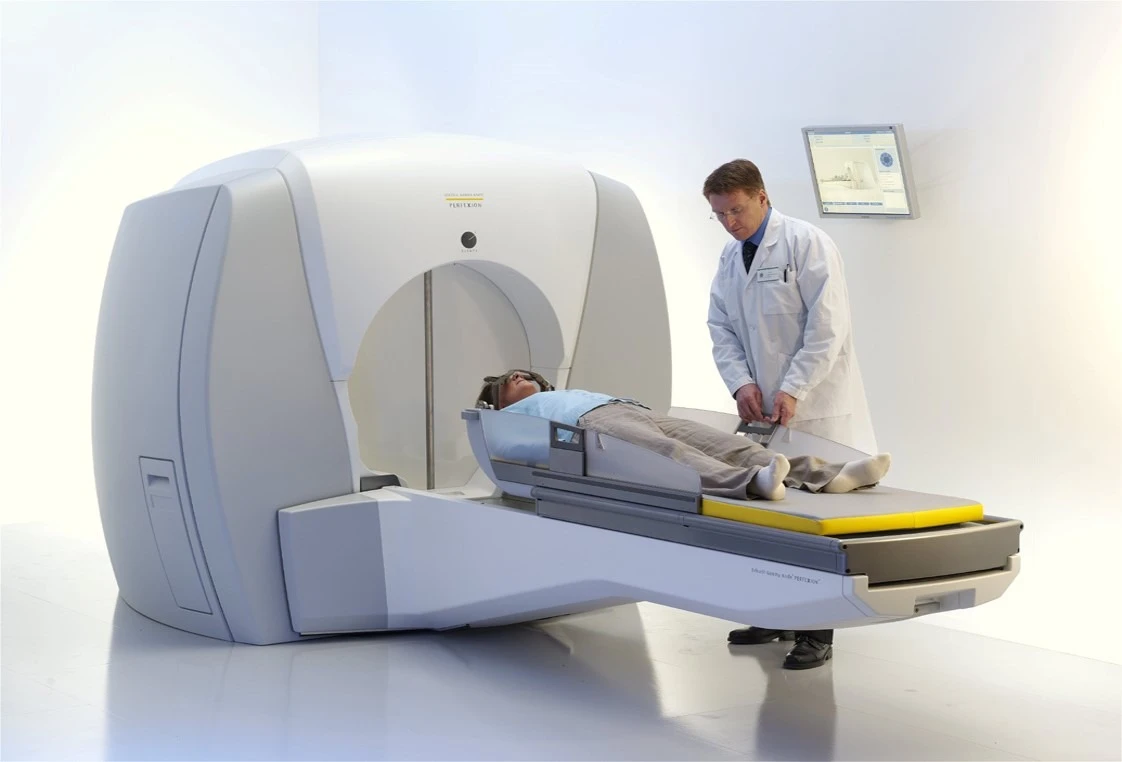
Treatment Overview & Clinical Details
Gamma Knife is an advanced form of stereotactic radiosurgery (SRS) used to treat selected conditions affecting the brain and other intracranial structures.
Despite its name, Gamma Knife does not involve a conventional surgical blade and does not physically cut or remove a tumor. Instead, it uses multiple precisely focused beams of gamma radiation to deliver a concentrated dose of radiation to a defined target while limiting radiation exposure to surrounding healthy tissue.
Gamma Knife has been primarily used for brain and intracranial lesions and may be considered for selected patients with brain metastases, certain primary brain tumors, benign intracranial tumors, and vascular or functional disorders.
How Does Gamma Knife Work?
Gamma Knife uses multiple radiation sources to generate gamma rays.
Before treatment, the medical team uses detailed imaging, such as MRI or CT scans, to precisely identify the location and shape of the target lesion.
A specialized treatment-planning system then determines the appropriate radiation dose and beam arrangement.
During treatment, radiation beams are delivered from multiple directions and converge at the target. Each individual beam delivers a relatively low dose as it passes through surrounding tissue, while the combined radiation dose at the target is much higher.
This highly focused approach allows selected intracranial lesions to be treated without conventional open brain surgery.
What Conditions Can Gamma Knife Treat?
Gamma Knife may be used for selected intracranial conditions, including:
- Brain metastases
- Certain primary brain tumors
- Meningiomas
- Vestibular schwannomas (acoustic neuromas)
- Pituitary adenomas
- Arteriovenous malformations (AVMs)
- Trigeminal neuralgia
- Other intracranial lesions that are considered suitable for stereotactic radiosurgery
In cancer care, Gamma Knife is particularly well established for the local treatment of selected brain metastases and other localized intracranial tumors.
Whether Gamma Knife is appropriate depends on factors such as tumor type, size, number of lesions, location, previous treatments, and the patient’s overall health.
What Are the Potential Advantages of Gamma Knife?
1. No Conventional Craniotomy
Gamma Knife does not require the large incision or skull opening associated with conventional brain surgery.
2. Highly Focused Radiation
Multiple radiation beams converge on the target, allowing a high radiation dose to be delivered to the intended area while creating a steep dose gradient around the target.
3. Reduced Exposure of Surrounding Tissue
The precision of treatment planning may help limit radiation exposure to surrounding healthy brain tissue.
The degree of tissue sparing depends on factors such as lesion size, location, treatment dose, and the patient’s individual anatomy.
4. Minimally Invasive Treatment
Because Gamma Knife does not involve conventional surgical removal of tissue, there is no surgical incision in the brain.
Many patients can return to their usual activities relatively quickly, although recovery and follow-up requirements vary according to the individual treatment plan.
Does Gamma Knife Actually “Cut” the Tumor?
No.
Despite the word “Knife” in its name, Gamma Knife does not use a physical surgical blade.
It is a form of stereotactic radiosurgery, in which precisely targeted radiation is used to damage the DNA of tumor cells or abnormal tissue.
The term “radiosurgery” refers to the precision and treatment intent of the technique rather than conventional surgical cutting.
Gamma Knife vs. Conventional Radiation Therapy
Conventional radiation therapy often delivers radiation over multiple treatment sessions, depending on the treatment plan.
Gamma Knife is a form of stereotactic radiosurgery that focuses on delivering a highly precise dose to a clearly defined target.
It is particularly useful for selected relatively small and well-defined intracranial lesions.
However, Gamma Knife is not appropriate for every brain tumor. Larger tumors, diffuse disease, or lesions requiring treatment of a broader area may require other radiation techniques, surgery, systemic therapy, or a combination of treatments.
Are There Risks Associated With Gamma Knife?
Yes.
Although Gamma Knife does not require conventional brain surgery, it is still a high-dose radiation treatment and may cause side effects.
Potential risks may include:
- Brain edema around the treated lesion
- Headache or nausea
- Temporary or persistent neurological symptoms
- Radiation necrosis
- Injury to surrounding brain tissue
- Other delayed radiation-related effects
The risk of complications depends on the location and size of the lesion, radiation dose, previous radiation treatment, and individual patient factors.
A comprehensive evaluation by an appropriate multidisciplinary medical team is therefore important before treatment.
Is Gamma Knife Suitable for Every Brain Tumor Patient?
No.
Treatment suitability depends on multiple factors, including:
Tumor type + tumor size + number of lesions + tumor location + surrounding edema + extent of disease + overall health + previous treatments
For some patients, Gamma Knife may be used as the primary local treatment.
For others, it may be combined with surgery, whole-brain radiation therapy, chemotherapy, targeted therapy, immunotherapy, or other systemic treatments.
Gamma Knife as Part of Comprehensive Cancer Care
For patients with cancer, particularly those with brain metastases, treatment decisions are generally based on the overall status of the disease rather than the brain lesion alone.
Depending on the individual case, treatment may involve:
Systemic therapy → Imaging assessment → Gamma Knife radiosurgery → Further systemic treatment and follow-up
For larger lesions causing significant mass effect or neurological symptoms, surgical removal may sometimes be more appropriate, followed by radiation treatment when indicated.
Therefore, Gamma Knife should be viewed as one component of comprehensive cancer care rather than a universal treatment for brain tumors.
Conclusion
Gamma Knife is a highly precise form of stereotactic radiosurgery that uses focused gamma radiation to treat selected intracranial tumors and other brain conditions without conventional open brain surgery.
For appropriately selected patients, it can provide an effective local treatment option while minimizing radiation exposure to surrounding healthy tissue as much as possible.
However, Gamma Knife is not suitable for every patient or every type of brain tumor.
Treatment decisions should be based on accurate diagnosis, detailed imaging, tumor characteristics, previous treatments, overall health, and multidisciplinary clinical assessment.
An individualized treatment plan can help determine whether Gamma Knife, surgery, conventional radiation therapy, systemic treatment, or a combination of approaches is most appropriate for the patient.