
Treatment Overview & Clinical Details
What Is CAR T-Cell Therapy?
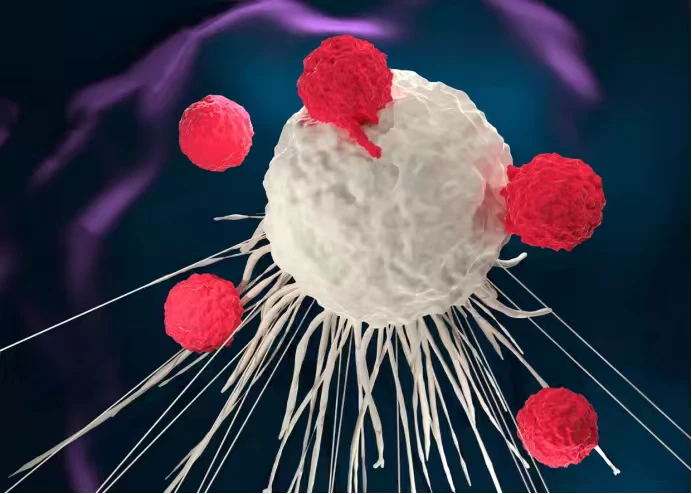
CAR T-cell therapy (Chimeric Antigen Receptor T-cell therapy) is an advanced form of cellular immunotherapy that uses a patient’s own immune cells to recognize and attack cancer cells.
T cells are a type of white blood cell that play an important role in the immune system. During CAR T-cell therapy, a patient’s T cells are collected and genetically modified in a specialized laboratory to express a chimeric antigen receptor (CAR) on their surface.
The modified T cells are then expanded to produce a large number of therapeutic cells and infused back into the patient. Once inside the body, these CAR T cells can recognize specific targets on cancer cells and activate an immune response against them.
CAR T-cell therapy is currently used primarily for selected hematologic malignancies, particularly certain types of leukemia, lymphoma, and multiple myeloma.
How Does CAR T-Cell Therapy Work?
CAR T-cell therapy generally involves several major steps:
1. T-Cell Collection
The patient’s blood is collected through a procedure called leukapheresis. T cells are separated from the blood, while the remaining blood components are returned to the patient.
2. Genetic Modification
The collected T cells are sent to a specialized manufacturing facility, where they are genetically modified to express a chimeric antigen receptor (CAR).
The CAR is designed to recognize a specific antigen expressed on the patient’s cancer cells.
3. T-Cell Expansion
The genetically modified T cells are multiplied in the laboratory until a sufficient number of therapeutic cells are produced.
The manufacturing process can take several weeks, depending on the specific CAR T-cell product and clinical circumstances.
4. Lymphodepleting Chemotherapy
Before the CAR T-cell infusion, patients generally receive a short course of chemotherapy known as lymphodepletion.
This helps create an appropriate environment for the infused CAR T cells to expand and function effectively.
5. CAR T-Cell Infusion
The manufactured CAR T cells are infused back into the patient’s bloodstream.
After infusion, the CAR T cells can multiply within the body and identify cancer cells carrying the target antigen.
6. Immune-Mediated Cancer Cell Destruction
Once activated, CAR T cells can attack and destroy targeted cancer cells.
The therapeutic effect may continue after the initial infusion as CAR T cells persist and function within the patient’s body.
Potential Advantages of CAR T-Cell Therapy
1. Personalized Cellular Therapy
CAR T-cell therapy uses immune cells collected from the individual patient in many currently approved approaches, making it a highly personalized form of cancer treatment.
2. Targeted Recognition of Cancer Cells
CAR T cells are engineered to recognize specific antigens on cancer cells. This allows the immune system to directly target cells carrying the corresponding antigen.
3. Potential for Durable Responses
Some patients with certain blood cancers can achieve deep and durable responses following CAR T-cell therapy, including patients whose disease has returned or has not responded adequately to previous treatments.
4. A Treatment Option for Selected Relapsed or Refractory Cancers
CAR T-cell therapy has become an important treatment option for certain patients with relapsed or refractory hematologic malignancies, particularly when standard treatments have failed or are no longer effective.
5. Rapid Expansion of the Field
CAR T-cell therapy is an actively developing area of cancer research. New CAR targets, treatment strategies, and applications are being studied for additional cancer types and clinical situations.
Cancers That May Be Treated with CAR T-Cell Therapy
CAR T-cell therapy is currently used primarily for selected blood cancers.
Depending on the specific CAR T-cell product and regulatory approval, potential indications may include:
B-Cell Acute Lymphoblastic Leukemia (B-ALL)
Certain CAR T-cell therapies are approved for selected patients with B-cell acute lymphoblastic leukemia, including specific pediatric and adult patient populations.
B-Cell Lymphomas
CAR T-cell therapy may be used for selected patients with certain aggressive or relapsed/refractory B-cell lymphomas, including:
- Diffuse large B-cell lymphoma (DLBCL)
- High-grade B-cell lymphoma
- Primary mediastinal large B-cell lymphoma
- Follicular lymphoma in selected settings
- Other specified B-cell malignancies, depending on the treatment product and regulatory indication
Multiple Myeloma
Certain CAR T-cell therapies targeting B-cell maturation antigen (BCMA) are approved for selected patients with relapsed or refractory multiple myeloma.
Other Hematologic Malignancies
CAR T-cell therapy is also being studied for other blood cancers, including additional types of leukemia, lymphoma, and multiple myeloma.
The availability and approved indications vary by country and by specific CAR T-cell product.
CAR T-Cell Therapy Treatment Process
1. Comprehensive Medical Evaluation
Before treatment, the medical team evaluates the patient’s diagnosis, cancer stage and biology, previous treatments, overall health, organ function, infection status, and other factors.
The patient’s cancer cells are also evaluated to determine whether the relevant target antigen is present.
2. Leukapheresis
T cells are collected from the patient’s blood using leukapheresis.
The collected cells are then transported to a specialized manufacturing facility for genetic modification and expansion.
3. CAR T-Cell Manufacturing
The T cells are genetically modified and expanded under controlled laboratory conditions.
Quality-control testing is performed before the final CAR T-cell product is released for treatment.
4. Bridging Therapy When Needed
Because CAR T-cell manufacturing may take time, some patients may require additional treatment during the manufacturing period to control their disease.
This is known as bridging therapy and is determined on an individual basis.
5. Lymphodepleting Chemotherapy
A short course of chemotherapy is generally administered before the CAR T-cell infusion to prepare the patient’s immune system for the therapy.
CAR T-Cell Infusion
The CAR T-cell product is administered intravenously.
The infusion itself is generally relatively brief, but close medical monitoring is required afterward.
7. Close Monitoring After Infusion
Patients are closely monitored for potential complications, particularly during the first days and weeks after treatment.
Depending on the CAR T-cell product and the patient’s condition, hospitalization or prolonged observation may be required.
8. Long-Term Follow-Up
Regular follow-up is necessary to evaluate treatment response, monitor blood counts and immune function, detect recurrence, and manage potential delayed complications.
Potential Side Effects and Risks
CAR T-cell therapy can produce powerful immune responses and may cause serious, potentially life-threatening complications.
1. Cytokine Release Syndrome (CRS)
Cytokine release syndrome is one of the most common early complications of CAR T-cell therapy.
It occurs when activated immune cells release large amounts of inflammatory cytokines.
Symptoms may include:
- Fever
- Chills
- Low blood pressure
- Rapid heartbeat
- Low oxygen levels
- Fatigue
- Difficulty breathing
CRS can range from mild to severe and requires close medical monitoring.
Treatment may include supportive care and medications such as tocilizumab, with corticosteroids used when clinically indicated.
2. Immune Effector Cell-Associated Neurotoxicity Syndrome (ICANS)
Some patients may develop neurological side effects known as ICANS.
Symptoms can include:
- Confusion
- Difficulty speaking
- Difficulty writing
- Sleepiness
- Tremors
- Seizures
- In severe cases, decreased consciousness
Patients receiving CAR T-cell therapy require careful neurological monitoring.
3. Low Blood Cell Counts
CAR T-cell therapy and the chemotherapy given before infusion can cause prolonged decreases in:
- White blood cells
- Red blood cells
- Platelets
This may increase the risk of infection, anemia, or bleeding.
4. Infections
Because CAR T-cell therapy can affect the immune system, patients may have an increased risk of bacterial, viral, or fungal infections.
Preventive medications and monitoring may be required.
5. B-Cell Aplasia and Low Immunoglobulin Levels
For CAR T-cell therapies targeting B-cell antigens, normal B cells may also be affected.
This can result in B-cell aplasia and reduced immunoglobulin levels, potentially increasing the risk of infection.
Some patients may require immunoglobulin replacement therapy.
CAR T-Cell Therapy vs. Conventional Cancer Treatment
| Feature | CAR T-Cell Therapy | Conventional Chemotherapy | Radiation Therapy |
| Treatment Type | Cellular immunotherapy | Systemic drug therapy | Localized radiation therapy |
| Primary Mechanism | Genetically modified T cells recognize and attack specific cancer targets | Drugs interfere with cancer cell growth and survival | Radiation damages the DNA of targeted cells |
| Treatment Target | Specific molecular targets expressed by cancer cells | Often affects rapidly dividing cells throughout the body | Primarily targets a defined treatment area |
| Personalization | Highly personalized in many currently used approaches | Treatment selected according to cancer type and patient factors | Individualized radiation planning |
| Treatment Course | Cell collection, manufacturing, preparation, infusion, and monitoring | Usually repeated cycles | May involve one or multiple treatment sessions |
| Potential Benefits | Can produce deep and durable responses in selected blood cancers | Widely applicable to many cancers | Important local treatment option for many cancers |
| Major Considerations | CRS, ICANS, infections, prolonged low blood counts, and other immune-related complications | Varies by drug and regimen | Side effects depend on the treatment site and radiation dose |
Limitations of CAR T-Cell Therapy
Despite its potential benefits, CAR T-cell therapy has important limitations.
1. Primarily Used for Selected Blood Cancers
Currently approved CAR T-cell therapies are primarily used for certain hematologic malignancies. Their effectiveness in most solid tumors remains an active area of research.
2. Complex Manufacturing Process
CAR T-cell therapy requires collection, genetic modification, expansion, quality testing, and reinfusion of the patient’s cells.
This makes the treatment more complex than many conventional cancer therapies.
3. Treatment Availability
CAR T-cell therapy is available only at specialized medical centers with appropriate cellular therapy programs, trained multidisciplinary teams, and facilities capable of safely administering and monitoring the treatment.
4. High Treatment Cost
CAR T-cell therapy can be expensive because of the complex cell manufacturing process, hospitalization or monitoring requirements, supportive care, and long-term follow-up.
Insurance coverage and reimbursement policies vary by country, region, and individual circumstances.
5. Serious Treatment-Related Risks
CAR T-cell therapy can cause serious immune-related complications. Patients should be treated at centers experienced in recognizing and managing these complications.
6. Not Every Patient Responds
Although some patients experience remarkable and durable responses, CAR T-cell therapy does not work for every patient. Cancer may fail to respond, or the disease may eventually return.
Important Considerations
- CAR T-cell therapy is an advanced cancer treatment, but it is not a universal cure. Its effectiveness depends on the type and biology of the cancer, treatment history, target antigen expression, overall health, and other individual factors.
- CAR T-cell therapy is currently most established for selected hematologic malignancies. Its use in solid tumors remains an active area of clinical research.
- Treatment should be performed at an experienced cellular therapy center. Patients require specialized evaluation, treatment, and monitoring before and after CAR T-cell infusion.
- Patients should understand both the potential benefits and serious risks. CRS, ICANS, infections, prolonged cytopenias, and other complications may require intensive medical management.
- Eligibility must be determined individually. The medical team will review the patient’s diagnosis, previous treatments, disease status, laboratory results, organ function, and other clinical factors before determining whether CAR T-cell therapy is appropriate.
Summary
CAR T-cell therapy is an innovative form of cellular immunotherapy that genetically engineers a patient’s T cells to recognize and attack cancer cells.
It has transformed the treatment landscape for certain relapsed or refractory blood cancers, with some patients achieving deep and durable responses after previously unsuccessful treatments.
However, CAR T-cell therapy is a complex treatment that carries potentially serious risks and is not suitable for every patient.
A comprehensive evaluation by an experienced hematology, oncology, and cellular therapy team is essential to determine whether CAR T-cell therapy is an appropriate treatment option.