
Treatment Overview & Clinical Details
Y-90 radioembolization, also known as Yttrium-90 radioembolization or Selective Internal Radiation Therapy (SIRT), is a minimally invasive liver-directed treatment that delivers radioactive microspheres directly to tumors in the liver.
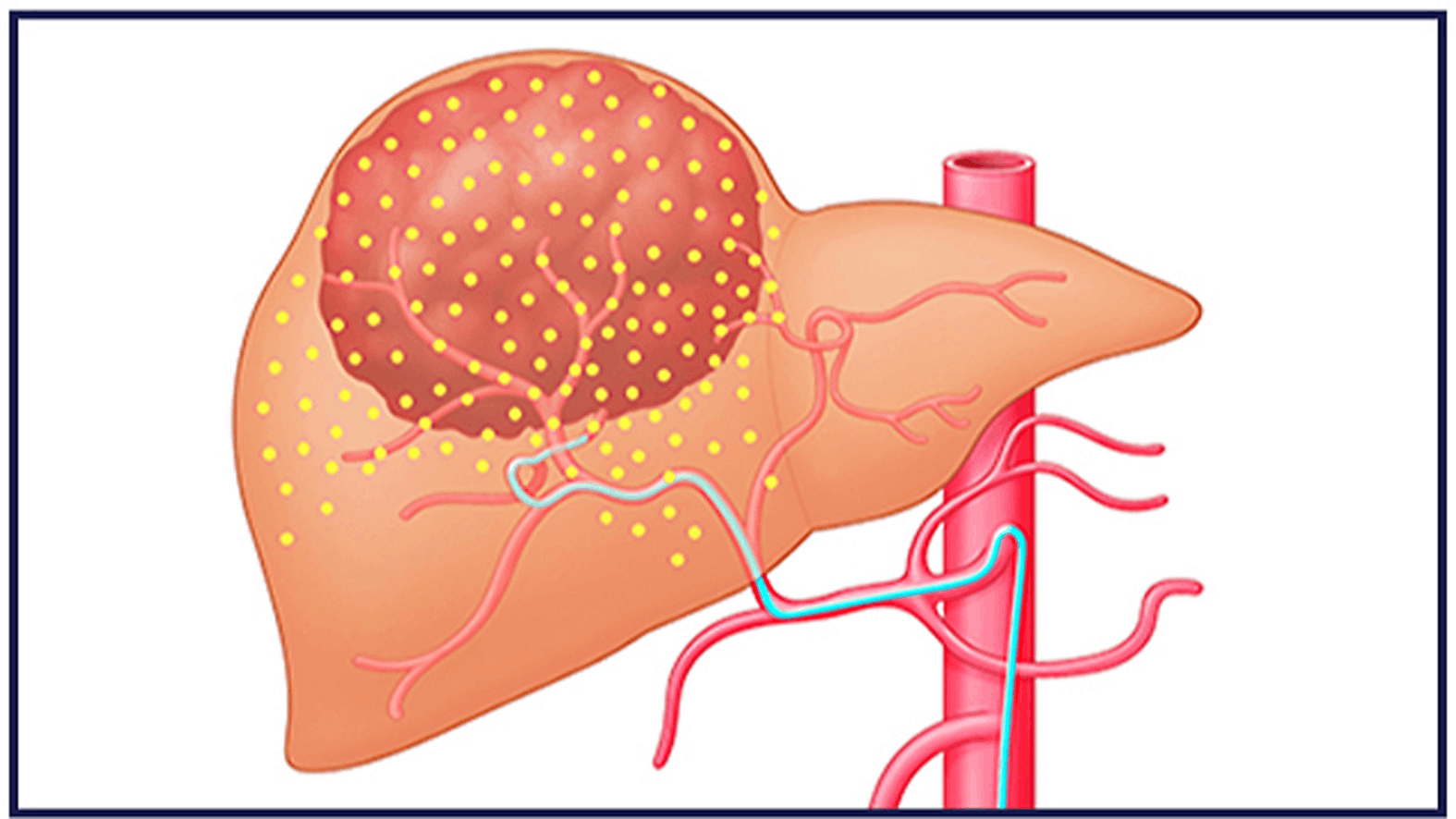
The treatment uses tiny radioactive microspheres containing Yttrium-90 (Y-90), a radioactive isotope that emits beta radiation. These microspheres are delivered through the hepatic arteries that supply blood to the tumor.
Because liver tumors often receive a substantial portion of their blood supply from the hepatic artery, while normal liver tissue receives a greater proportion of its blood supply from the portal vein, Y-90 radioembolization can be used to deliver radiation preferentially to tumor tissue.
The microspheres become lodged in the small blood vessels surrounding the tumor and deliver radiation locally over a limited distance. This allows a high radiation dose to be delivered to the tumor while limiting radiation exposure to surrounding liver tissue as much as possible.
Y-90 radioembolization is primarily used for selected patients with liver cancer or cancer that has spread to the liver. It may be used as a standalone liver-directed treatment or as part of a broader multidisciplinary treatment strategy.
What Is Y-90?
Yttrium-90 (Y-90) is a radioactive isotope that emits beta particles.
Unlike conventional external-beam radiation therapy, which delivers radiation from outside the body, Y-90 radioembolization delivers radiation from inside the blood vessels supplying the tumor.
The Y-90 is incorporated into microscopic particles, commonly called radioactive microspheres.
These microspheres are introduced into the arteries supplying the liver and become lodged within the tumor’s vascular network.
Once positioned, the Y-90 microspheres emit radiation locally and damage the tumor cells and their surrounding blood supply.
How Does Y-90 Radioembolization Work?
Y-90 treatment is generally performed by an interventional radiology team using image-guided catheter techniques.
The treatment usually involves several important steps.
Step 1: Vascular Mapping and Treatment Planning
Before treatment, the physician evaluates the patient’s liver anatomy and blood supply using angiography and other imaging studies.
The goal is to identify the arteries supplying the tumor and assess blood flow to surrounding organs.
This planning stage is important because radioactive microspheres should be directed toward the intended treatment area while minimizing unintended delivery to organs outside the liver.
Step 2: Assessment Before Treatment
Additional tests may be performed to evaluate liver function, overall health, and the patient’s suitability for Y-90 treatment.
In selected cases, a simulation or mapping procedure using a non-therapeutic radioactive tracer may be performed to estimate how particles would distribute within the liver and to assess the risk of radiation reaching other organs.
Step 3: Catheter Placement
During treatment, a thin catheter is introduced through an artery, commonly through the femoral or radial artery, and carefully advanced into the hepatic arterial system.
The procedure is performed under imaging guidance.
Step 4: Delivery of Y-90 Microspheres
The Y-90 microspheres are then delivered through the catheter into the selected hepatic artery.
The microspheres travel with the arterial blood flow and become lodged in the small vessels supplying the tumor.
Step 5: Local Radiation Delivery
Once the microspheres are positioned, the Y-90 emits beta radiation.
The radiation travels only a limited distance through tissue, allowing the treatment to concentrate radiation around the areas where the microspheres have accumulated.
The radiation causes DNA damage and can lead to tumor cell death.
Why Can Y-90 Target Liver Tumors?
One of the key principles behind Y-90 radioembolization is the distinctive blood supply of the liver.
Normal liver tissue receives most of its blood supply from the portal vein, while liver tumors generally receive a greater proportion of their blood supply from the hepatic artery.
Y-90 microspheres are therefore delivered through the hepatic arterial circulation.
This allows the microspheres to preferentially reach areas supplied by tumor-associated arteries.
However, this is a relative difference in blood supply rather than an absolute separation.
Some normal liver tissue also receives blood from the hepatic artery, and tumors can have complex or variable vascular patterns.
Therefore, careful angiographic mapping and treatment planning are essential.
What Cancers Can Be Treated With Y-90?
Y-90 radioembolization is primarily used for selected liver-dominant or liver-limited cancers.
Potential indications include:
Hepatocellular Carcinoma (HCC)
Y-90 may be considered for selected patients with hepatocellular carcinoma, particularly when the disease is predominantly confined to the liver.
Depending on tumor stage and liver function, other treatment options may include surgery, ablation, transarterial chemoembolization (TACE), systemic therapy, or other forms of radiation therapy.
Intrahepatic Cholangiocarcinoma
Selected patients with intrahepatic cholangiocarcinoma may be considered for Y-90 radioembolization, particularly when the disease is unresectable or predominantly liver-based.
Colorectal Cancer Liver Metastases
Y-90 may be used in selected patients whose colorectal cancer has metastasized to the liver, particularly when the liver is the dominant site of disease and other treatment options have become limited.
Neuroendocrine Tumor Liver Metastases
Selected patients with neuroendocrine tumors that have metastasized to the liver may also be candidates for liver-directed radioembolization.
Other Liver Metastases
Y-90 may sometimes be considered for liver metastases originating from other primary cancers.
The suitability of treatment depends on the primary tumor type, extent of liver involvement, liver function, vascular anatomy, previous treatments, and overall health.
What Are the Potential Advantages of Y-90?
Direct Delivery of Radiation to the Liver
Y-90 delivers radiation directly through the arterial blood supply of the liver rather than delivering radiation from outside the body.
High Local Radiation Dose
Because the radioactive microspheres remain concentrated in the treated vascular territory, a relatively high radiation dose can be delivered locally to the tumor.
Limited Radiation Penetration
Y-90 beta radiation has a relatively short tissue penetration range.
This helps concentrate the radiation effect around the areas where the microspheres are deposited.
Minimally Invasive Procedure
Y-90 is delivered through a catheter rather than through conventional surgery.
Can Be Used for Selected Unresectable Tumors
Some liver tumors cannot be surgically removed because of their size, location, number, or the patient’s overall medical condition.
In selected cases, Y-90 can provide a liver-directed treatment option when surgery is not feasible.
Y-90 vs. TACE
Y-90 radioembolization and Transarterial Chemoembolization (TACE) are both catheter-based liver-directed treatments, but they work differently.
| Feature | Y-90 Radioembolization | TACE |
| Full name | Yttrium-90 Radioembolization | Transarterial Chemoembolization |
| Main principle | Internal radiation | Chemotherapy + arterial embolization |
| Treatment agent | Y-90 radioactive microspheres | Chemotherapy and embolic materials |
| Radiation | Yes | Not necessarily |
| Blood supply | Targets tumor-feeding arteries | Blocks tumor-feeding arteries |
| Main treatment effect | Local radiation | Local chemotherapy and ischemia |
| Common applications | Selected liver cancers and liver metastases | Selected liver cancers, particularly HCC |
Neither treatment is universally superior.
The choice depends on the cancer type, disease stage, liver function, vascular anatomy, previous treatment, and treatment objectives.
Y-90 vs. External-Beam Radiation Therapy
External-beam radiation therapy delivers radiation from a machine outside the body.
Y-90 radioembolization delivers radiation internally through radioactive microspheres placed within the tumor’s blood supply.
The two approaches differ in how radiation reaches the tumor.
Y-90 may be particularly useful when tumors are distributed within the liver or when internal delivery can provide an appropriate treatment distribution.
External-beam radiation therapy may be more suitable when a specific target can be treated accurately from outside the body.
In some clinical situations, radiation therapy and Y-90 may both be considered, depending on the treatment objective and anatomical considerations.
Is Y-90 a Form of Chemotherapy?
No.
Y-90 is a form of radiation therapy, specifically a liver-directed form of internal radiation therapy.
It does not use conventional chemotherapy drugs.
The treatment uses radioactive microspheres containing Yttrium-90 to deliver beta radiation directly to selected areas of the liver.
However, Y-90 may be used alongside systemic chemotherapy, targeted therapy, immunotherapy, or other treatments when clinically appropriate.
Is Y-90 a Form of Radioactive Medicine?
Yes.
Y-90 radioembolization is a form of targeted radionuclide therapy / internal radiation therapy.
The radioactive isotope is incorporated into microspheres that are delivered directly into the blood vessels supplying the tumor.
Unlike some systemic radiopharmaceutical therapies that circulate throughout the body, Y-90 radioembolization is primarily designed as a localized liver-directed treatment.
What Are the Potential Side Effects and Risks?
Although Y-90 is minimally invasive, it is still an active radiation treatment and can cause side effects or complications.
Common or possible side effects include:
- Fatigue
- Abdominal discomfort or pain
- Nausea
- Loss of appetite
- Fever
- Temporary elevation of liver enzymes
- Changes in liver function
Less common but potentially serious complications may include:
- Radiation-induced liver injury
- Gastric or intestinal ulceration caused by unintended microsphere delivery
- Biliary complications
- Vascular complications
- Infection
- Bleeding
- Radiation pneumonitis in rare circumstances when microspheres reach the lungs
The risk of complications depends on liver function, vascular anatomy, treatment distribution, tumor burden, and other individual factors.
Careful pre-treatment angiographic assessment and treatment planning are therefore essential.
Who May Be a Candidate for Y-90?
Y-90 radioembolization requires careful patient selection.
The medical team may consider:
- Primary cancer type
- Extent of liver involvement
- Presence of disease outside the liver
- Liver function
- Tumor size and number
- Vascular anatomy
- Previous treatments
- Overall health
- Performance status
- Treatment goals
Y-90 may be particularly relevant when the liver is the dominant site of disease and the tumor is not suitable for surgical removal or other local treatments.
Patients with severe liver dysfunction or certain unfavorable vascular patterns may not be appropriate candidates.
Can Y-90 Be Combined With Other Cancer Treatments?
Yes.
Y-90 can sometimes be incorporated into a broader multidisciplinary cancer treatment strategy.
Depending on the cancer type and clinical situation, it may be combined with:
Y-90 + Chemotherapy
Y-90 + Targeted Therapy
Y-90 + Immunotherapy
Y-90 + Surgery
Y-90 + Ablation
The optimal sequence and combination depend on the patient’s disease characteristics and available clinical evidence.
Treatment decisions should be made by a multidisciplinary team rather than based solely on the availability of Y-90 therapy.
What Happens After Y-90 Treatment?
After treatment, patients typically undergo clinical follow-up and imaging to evaluate the response.
Follow-up may include:
- Liver function tests
- Tumor marker assessment when appropriate
- CT or MRI
- Clinical evaluation
- Additional imaging or laboratory tests as indicated
The response to Y-90 may take time to become apparent.
Imaging changes after treatment can sometimes reflect treatment-related inflammation or necrosis rather than immediate tumor progression. Therefore, post-treatment imaging should be interpreted by clinicians experienced in evaluating treated liver tumors.
Depending on the response and overall disease status, additional treatment may be recommended.
Can Y-90 Cure Liver Cancer?
Y-90 is not a universal cure for liver cancer.
In selected patients with localized or liver-dominant disease, Y-90 may provide meaningful local tumor control and, in certain treatment settings, may be used with potentially curative intent.
However, many patients receiving Y-90 have unresectable or advanced disease, where the primary goal may be to control tumor growth, delay disease progression, reduce tumor burden, or manage symptoms.
Whether Y-90 can contribute to long-term disease control depends on the cancer type, stage, liver function, tumor burden, treatment response, and other therapies.
Y-90 as Part of Multidisciplinary Cancer Care
Liver cancer and liver metastases often require a multidisciplinary treatment approach.
The medical team may include:
Medical Oncologists + Hepatobiliary Surgeons + Interventional Radiologists + Radiation Oncologists + Radiologists + Nuclear Medicine Specialists + Pathologists
Depending on the individual case, treatment may involve:
Diagnosis and Staging → Multidisciplinary Assessment → Y-90 Radioembolization → Imaging Follow-Up → Additional Local or Systemic Treatment
For some patients, Y-90 may be used before surgery or ablation to reduce or control liver tumor burden.
For others, it may be used after systemic therapy or alongside ongoing cancer treatment.
The treatment sequence should always be individualized.
Conclusion
Y-90 Radioembolization, also known as Yttrium-90 radioembolization or Selective Internal Radiation Therapy (SIRT), is a minimally invasive liver-directed treatment that delivers radioactive microspheres directly to the blood vessels supplying liver tumors.
By combining catheter-based delivery with localized beta radiation, Y-90 can provide a highly targeted form of internal radiation therapy for selected patients with liver cancer or cancer that has spread to the liver.
It may be considered for hepatocellular carcinoma, intrahepatic cholangiocarcinoma, colorectal cancer liver metastases, neuroendocrine tumor liver metastases, and selected other liver-dominant cancers.
However, Y-90 is not appropriate for every patient and should not be considered a universal alternative to surgery, ablation, TACE, external-beam radiation therapy, or systemic treatment.
The most appropriate treatment depends on the cancer type, stage, liver function, tumor burden, vascular anatomy, previous treatments, overall health, and individual treatment goals.
Patients considering Y-90 therapy should undergo comprehensive imaging, laboratory assessment, vascular mapping, and multidisciplinary evaluation before treatment.
An experienced liver cancer team can determine whether Y-90 radioembolization is an appropriate component of an individualized treatment plan.