
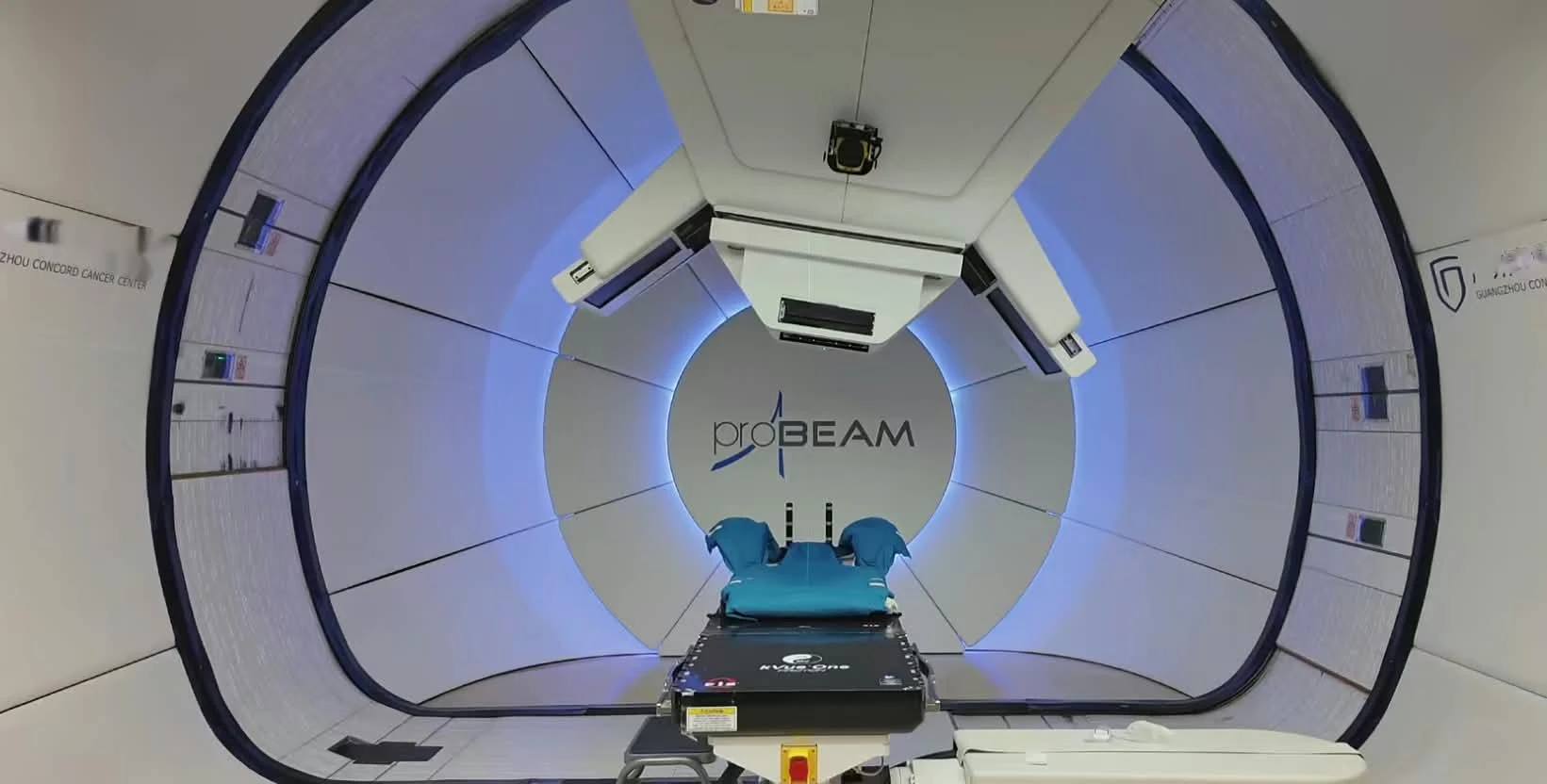
Treatment Overview & Clinical Details
1. What Is Proton Therapy?
Proton therapy is a form of particle radiation therapy and an advanced radiation treatment technique. It uses positively charged proton particles that are accelerated to high energies to create a focused proton beam. The beam is precisely directed toward the tumor, where it deposits energy to damage and destroy cancer cells.
Proton beams have a unique physical characteristic known as the Bragg peak. Compared with conventional X-ray radiation, proton beams can deliver a relatively low dose of radiation before reaching the tumor, deposit most of their energy within the targeted area, and then rapidly decrease in dose beyond the treatment site. This physical property may help reduce radiation exposure to healthy tissues and organs located beyond the tumor.
2. Advantages of Proton Therapy
1. High Precision
Proton therapy allows radiation energy to be concentrated within the treatment area. In appropriately selected patients, this may reduce radiation exposure to surrounding healthy organs and tissues.
2. Potentially Fewer Side Effects
By reducing radiation exposure to nearby healthy tissues, proton therapy may help reduce certain treatment-related side effects, such as fatigue, nausea, and mucosal irritation, while helping protect critical organs such as the heart, lungs, and gastrointestinal tract.
However, the potential reduction in side effects varies depending on the tumor type, location, treatment plan, and individual patient factors.
3. Particularly Beneficial for Certain Patient Groups
Proton therapy may be considered for:
- Children with cancer, where reducing unnecessary radiation exposure may help minimize potential long-term effects on growth and development
- Tumors located close to critical organs
- Certain recurrent tumors
- Selected tumors that cannot be treated surgically or for which surgery is not the preferred treatment option
4. Maintaining Quality of Life
Proton therapy is generally delivered on an outpatient basis. Many patients are able to maintain their usual daily activities during treatment, depending on their overall health and the effects of the cancer and treatment.
3. Tumors That May Be Suitable for Proton Therapy
Proton therapy may be considered for selected patients with tumors such as:
- Brain tumors and skull-base tumors
- Head and neck cancers
- Lung cancer
- Liver cancer
- Prostate cancer
- Chordomas and chondrosarcomas
- Selected pediatric solid tumors
- Certain orbital and sinus tumors
Conditions That May Be Less Suitable
Proton therapy may be less appropriate in certain situations, including:
- Advanced cancers with widespread metastatic disease
- Some tumors involving mobile or hollow organs, such as certain gastrointestinal cancers
- Certain hematologic malignancies, depending on the specific disease and treatment plan
Important: Eligibility for proton therapy should be determined through a comprehensive evaluation by a multidisciplinary medical team. Doctors will consider the pathology, cancer stage, tumor location, overall health, previous treatments, and the expected benefits of proton therapy compared with other radiation techniques.
Proton therapy is not a universal treatment and is not appropriate for every cancer patient.
4. Proton Therapy Treatment Process
1. Multidisciplinary Evaluation
A radiation oncologist and other specialists will evaluate whether proton therapy is appropriate based on the patient’s diagnosis, tumor characteristics, overall health, and treatment goals.
2. Treatment Simulation and Imaging
A customized immobilization device may be created to help maintain the patient’s position during treatment. CT and/or MRI imaging may be performed to accurately define the tumor and surrounding organs.
3. Treatment Planning
Radiation oncologists and medical physicists develop an individualized treatment plan. This includes determining the appropriate proton beam angles, radiation dose, treatment fields, and other technical parameters.
4. Proton Beam Treatment
Treatment is generally delivered on an outpatient basis. The actual radiation delivery is usually brief, although the total time required for each visit may include patient positioning and imaging verification.
The number of treatment sessions varies depending on the type, location, and stage of the cancer and the individual treatment plan.
5. Follow-Up
After treatment, patients receive regular follow-up appointments, which may include imaging studies, laboratory tests, and clinical evaluations to monitor treatment response, disease status, and potential short- or long-term side effects.
5. Limitations of Proton Therapy
1. Limited Availability
Proton therapy requires highly specialized and expensive equipment and facilities. As a result, proton therapy centers are less widely available than conventional radiation therapy centers.
2. Higher Treatment Costs
Proton therapy can be significantly more expensive than conventional radiation therapy. Insurance coverage and reimbursement policies vary by country, region, insurance provider, and individual circumstances.
3. Not Appropriate for Every Cancer
Proton therapy cannot replace surgery, chemotherapy, targeted therapy, immunotherapy, or other cancer treatments. Depending on the diagnosis, patients may require a combination of treatment approaches.
4. Side Effects Can Still Occur
Although proton therapy can reduce radiation exposure to healthy tissues in appropriately selected cases, it is still a form of radiation therapy and can cause side effects.
Potential side effects vary according to the treatment area and may include fatigue, skin reactions, inflammation, or other site-specific effects.
6. Proton Therapy vs. Conventional Radiation Therapy
| Category | Conventional Photon Radiation Therapy | Proton Therapy |
| Energy Deposition | Radiation enters and exits the body, delivering dose along its path | The Bragg peak allows the majority of the planned dose to be deposited near the end of the proton beam’s range, with a rapid dose reduction beyond the target |
| Radiation Exposure to Healthy Tissue | Some healthy tissue receives radiation before and beyond the tumor | May reduce radiation exposure to surrounding and downstream healthy tissues in appropriately selected cases |
| Potential Side Effects | Vary depending on the treatment area and radiation dose | May reduce certain side effects in selected patients, but side effects can still occur |
| Treatment Cost | Generally lower | Generally higher |
| Availability | Widely available | Available at specialized proton therapy centers |
| Typical Applications | Used for a broad range of cancers | Particularly considered for selected tumors where its dose-distribution advantages may provide a clinical benefit |
7. Important Considerations
- Proton therapy is a form of radiation therapy and does not guarantee a cure. Treatment outcomes depend on many factors, including cancer type, stage, tumor location, biology, overall health, and previous treatments.
- Proton therapy should not be selected solely because it is a newer or more advanced technology. A qualified radiation oncology team should compare proton therapy with other appropriate treatment options and determine which approach is most likely to provide the best balance of tumor control and protection of healthy tissue.
- Patients considering treatment abroad should carefully evaluate the qualifications and accreditation of the treatment center, as well as the treatment plan, expected benefits, potential risks, total cost, insurance coverage, travel requirements, and follow-up arrangements.
- A personalized medical evaluation is essential. The suitability of proton therapy can only be determined after reviewing the patient’s medical records, pathology, imaging studies, previous treatments, and overall clinical condition.